
 日本語
Three writing systems
Hiragana, katakana and kanji are mixed in every sentence. Most beginners stall here, before learning a single useful word.
Language Game drops you in a small Japanese town where everything can be scanned: ねこ, 木, 魚, お茶. You see the word, hear it, and master it in quick duels against rivals. Free to start, in your browser.
No sign-up · in your browser · 16 languages
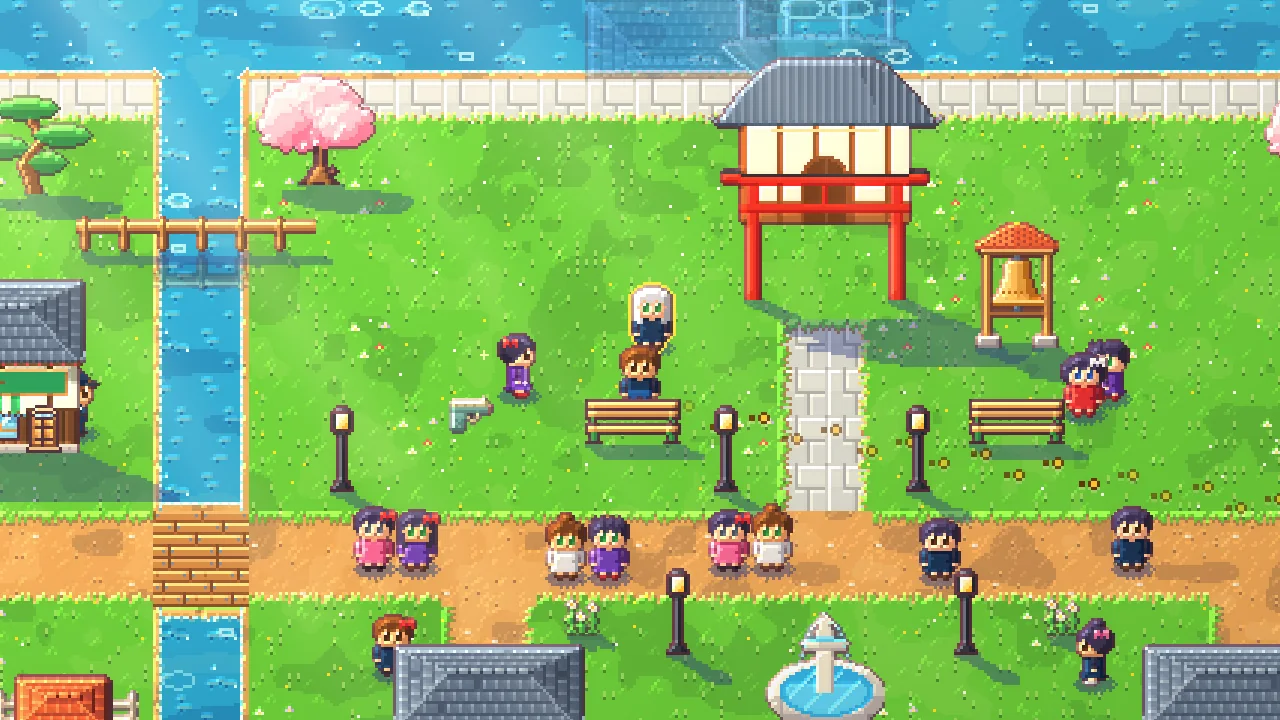
Straight from the game: each one is an object you scan in town, with its picture, its reading and its voice.
Three things stop most beginners. None of them is solved by another word list.
Hiragana, katakana and kanji are mixed in every sentence. Most beginners stall here, before learning a single useful word.
木 is “ki” on its own and “moku” in other words. You need to see kanji inside real words, not alone.
The verb comes last and は, が, を mark each role. It is regular, but nothing like English.
One simple loop — find the words, master them, beat the master, open the next island — tuned for this language.
Kanji come with their reading on top (木 · き · ki). You can keep rōmaji at the start, then drop to furigana, then to nothing.
Signs, objects and duels show the same kana again and again, attached to things you recognise.
Each word and sentence is read aloud, so long vowels and small っ become natural.
The language, and what the game covers.
| Speakers worldwide | about 125 million |
|---|---|
| Writing | Three scripts at once: hiragana, katakana and kanji |
| Time for an English speaker | Category IV — about 88 weeks (2,200 class hours) |
| In the game | 722 everyday words in 32 themes, first sentences and short grammar lessons, over 7 islands |
| Level | Beginner: around A1–A2 |
| Voices | Every word and sentence is read aloud |
| Where | In your browser — computer, phone or tablet, nothing to install |
| Price | Free to start, then €5 once for everything (all 16 languages, every island, multiplayer). No subscription |
Study time: U.S. Department of State, Foreign Service Institute — Foreign Language Training. Speaker numbers are rounded estimates.
No. Start right away: readings are shown above the words (furigana and rōmaji) and everything is spoken. Hiragana comes along as you play.
Yes for the base: everyday nouns, verbs, greetings and first sentences. It teaches standard polite Japanese, not anime slang.
A beginner base (around A1–A2, roughly the ground of JLPT N5): 722 everyday words in 32 themes, first sentences and short grammar lessons. Japanese is a Category IV language — about 2,200 class hours to professional level according to the U.S. Foreign Service Institute.
The full game includes them all. Switch whenever you like — the town changes with you.
 Learn Korean
 Learn Chinese
 Learn Spanish
 Learn French
 Learn German
 Learn Italian
 Learn Portuguese
 Learn Russian
 Learn Polish
 Learn Turkish
 Learn Dutch
 Learn Swedish
 Learn Indonesian
 Learn Vietnamese
 Learn English
Guides
Start in seconds, right in your browser.
Start Japanese freeUpdated November 25, 2026